

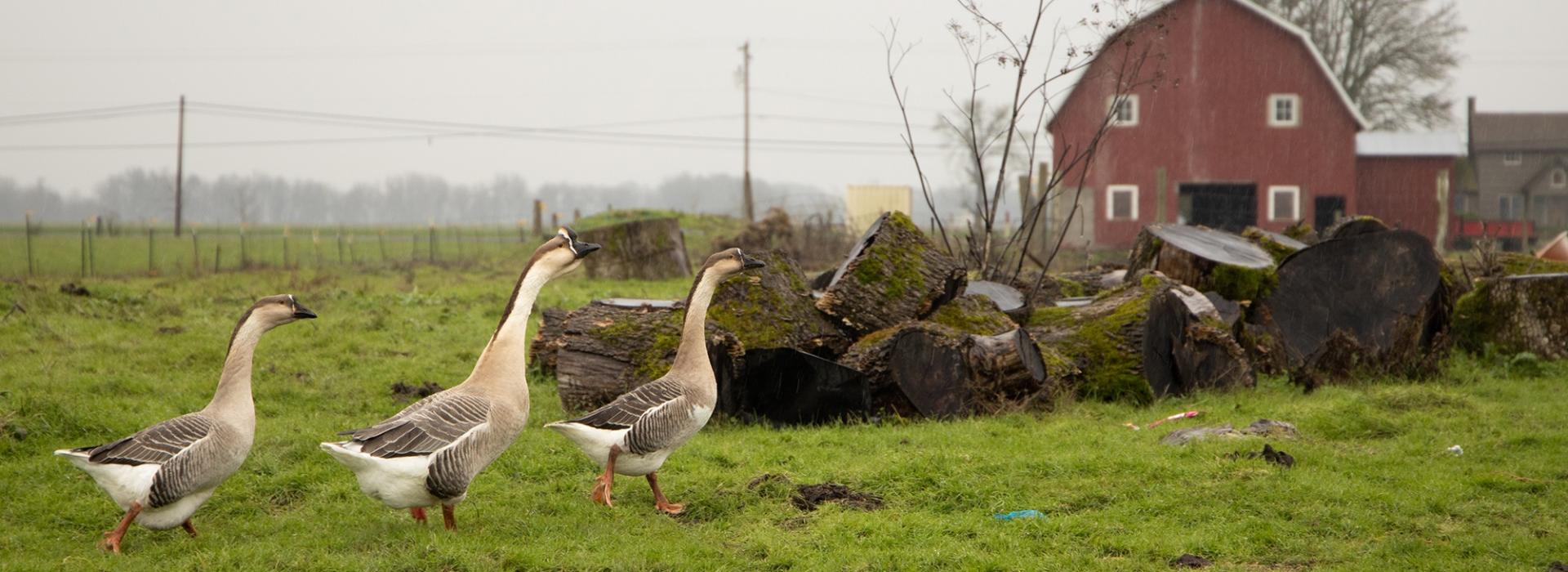
Most avian influenza viruses aren’t particularly harmful in birds, but at Circle of Life Farm in Tangent, Oregon, the death of two geese was a harbinger of disaster. (Courtesy: Oregon State University Carlson College of Veterinary Medicine)
December 18, 2023
Words by Kurt Williams, Photos by Jens Odegaard
Life on a farm has many ups and downs. Beth Timmons, at Circle of Life Farm in Tangent, Oregon, knows that all too well. So, when she came home to two dead geese at the base of a tree she wasn’t immediately startled, though perhaps she should have been. The dead geese signaled the arrival of avian flu at her farm.
Finding the geese didn’t make her happy, but she wasn’t surprised. With at least 130 birds on the farm at the time, you’re going to lose one now and again; it goes with the territory.
“Things die, statistically speaking,” she said. “I didn't think much of it. I buried the geese and off I went.”
The next day an old llama developed seizures and on Monday another goose wasn’t looking well. Now Timmons was worried.
“West Nile is what came to mind immediately, and I started to panic a little bit,” she said.
Timmons exhumed the bodies of the two dead geese and, along with that of the third, made a trip to the Oregon Veterinary Diagnostic Laboratory (OVDL) on the campus of Oregon State University.
“When it came back positive for avian flu, I was just dumbstruck.” she said.
Depop The Flock
Getting a diagnosis of avian flu under these circumstances isn’t a trifling matter. It’s very emotionally serious for the bird’s owner and deadly serious for the birds. To prevent the virus from spreading, Oregon Department of Agriculture officials arrived at Timmons farm to “depop the flock.” Translation: all birds at Circle of Life Farm must be euthanized.
The speed of spread and lethality of this form of avian flu in poultry is why scientists use a different, more evocative name for the disease tearing through Timmons’ birds: highly pathogenic avian influenza (HPAI).
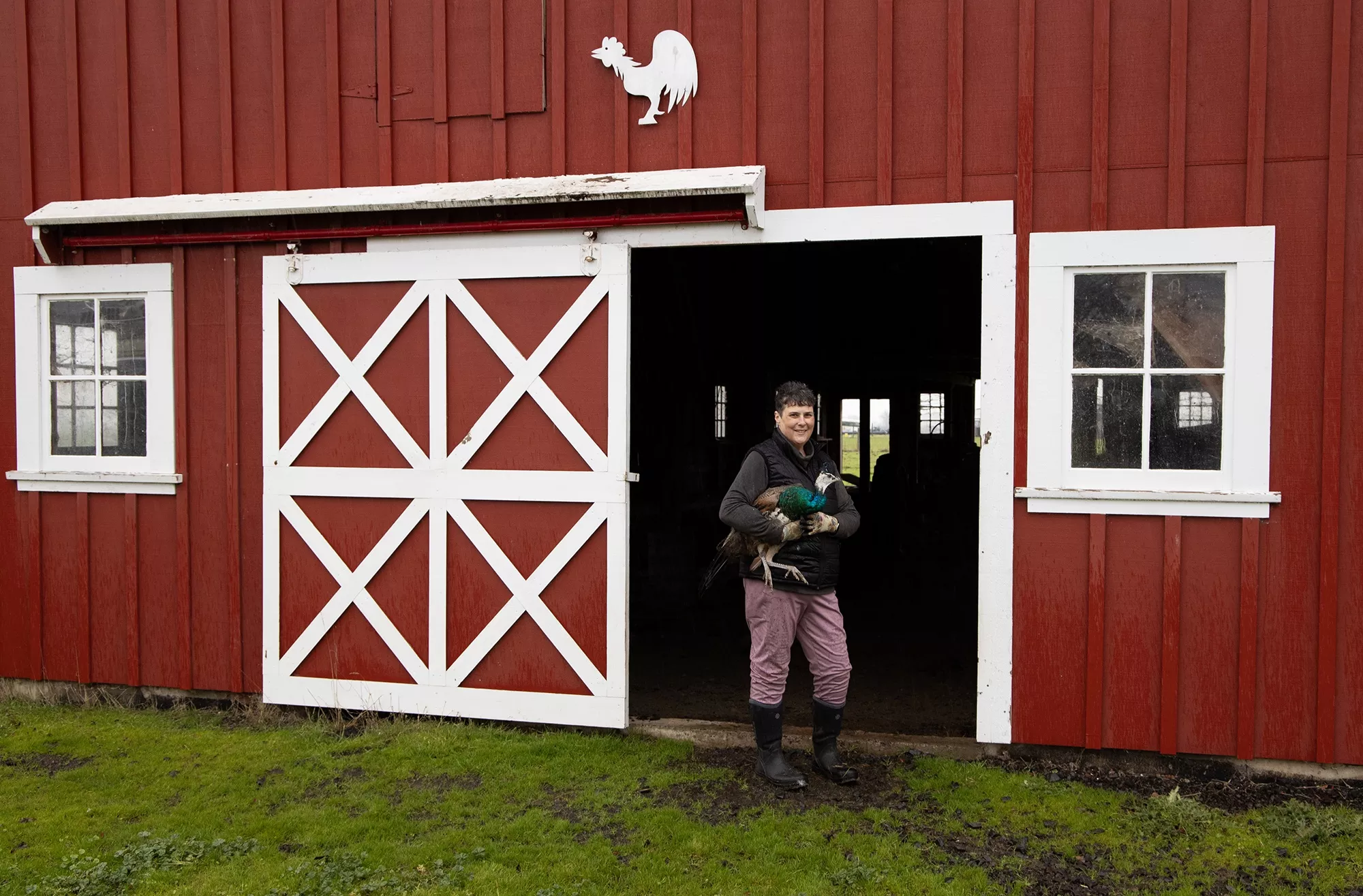
Life on a farm has many ups and downs, but farmers like Beth Timmons never want to hear that their entire flock is at risk. (Courtesy: Oregon State University Carlson College of Veterinary Medicine)
Duck, Duck, Goose
How did we get to the point where three dead geese in Tangent are a big deal for Oregon agriculture and the nation’s poultry industry? To understand, we must consider the virus’s nature, for therein lies the secret to their potential for menace.
Most avian influenza viruses aren’t particularly harmful in birds. Influenza viruses are common in the intestines of waterfowl, especially dabbling ducks, where they’ve diversified into many forms, spreading to other birds through feces.
Like all viruses, influenza can’t replicate – make new virus — without being inside cells. If they can’t get inside, they can’t infect the animal. No infection, no disease, no death. To unlock cells and get inside, influenza relies on two “keys”: the proteins hemagglutinin (H) and neuraminidase (N). Multiple types of H and N exist in influenza viruses.
The type of H on the virus makes HPAI dangerous. Its H acts like a master key, allowing the virus to infect many different cells in multiple organs, leading to rapid death in susceptible birds. The proteins are so important that influenza viruses are named by the type of H and N they possess. H5 and H7 influenza viruses are notorious for causing widespread devastation in poultry.
The virus in Timmons’ geese was H5N1. The origin of the virus goes back to 1996, the year the founding ancestral H5N1 virus emerged, coincidentally, in domestic geese in Guangdong, China.
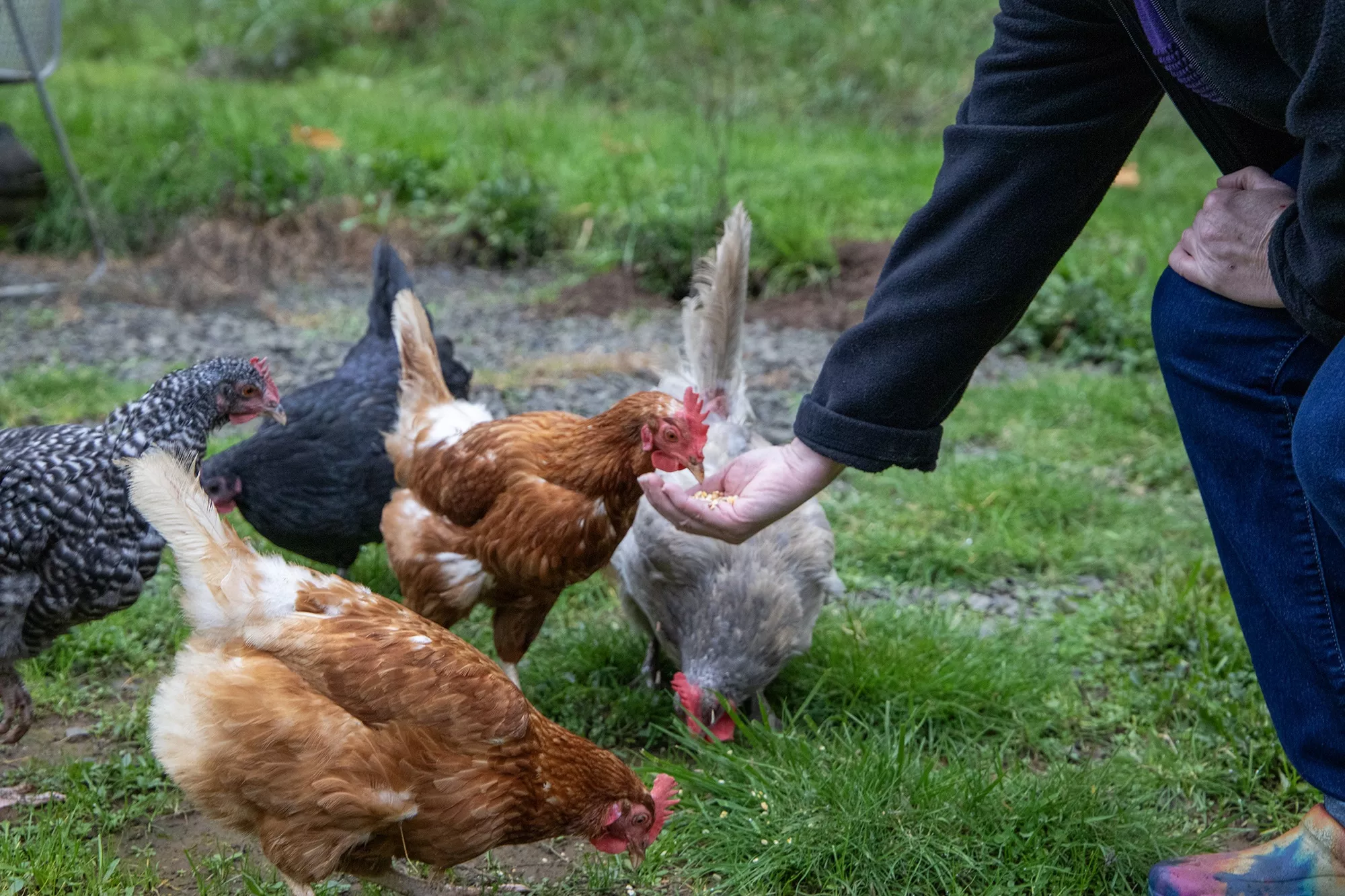
The national impact of HPAI on poultry production has been profound, leading to the death of more than 72 million birds and record high prices for eggs in the United States in 2022. (Courtesy: Oregon State University Carlson College of Veterinary Medicine)
What Happens in Oregon Doesn’t Stay in Oregon
The diagnosis of HPAI in Timmons’ geese in 2022 was the first in Oregon poultry in what has been a devastating epizootic (animal epidemic) that began in Europe in 2020. The virus arrived in North America with migratory birds in 2021, spreading across the continent before moving into Central and South America in 2022.
HPAI is of national importance to poultry production in the United States.
Control of the disease is coordinated by the National Animal Health Laboratory Network (NAHLN). The NAHLN was founded in 2002 as an early warning surveillance system for threats to U.S. agriculture. The OVDL joined the network in 2005.
Christie Loiacono, coordinator of the NAHLN, said its mission is “to utilize a partnership between the states and federal government to work together to protect animal agriculture by testing for high consequence animal diseases.”
HPAI is a “high consequence” disease. That’s why the diagnosis in Tangent elicited a swift and consequential response.
“We’ll test from the beginning of the disease identification all the way through to where we can be confident the disease is no longer with us,” Loiacono said.
Unfortunately, HPAI appears to be in no hurry to leave us.
As a member of the NAHLN, the OVDL is the only lab in Oregon approved to test for HPAI.
“Testing (for HPAI) started in February or March 2022, and our first positive (Timmons’ case) was in May,” said Dawn Dirks, laboratory supervisor for molecular diagnostics in the OVDL.
The laboratory has been testing for HPAI for well over a year, with no end in sight. Since January 2022, the laboratory has tested over 8,000 samples from domestic and wild birds.
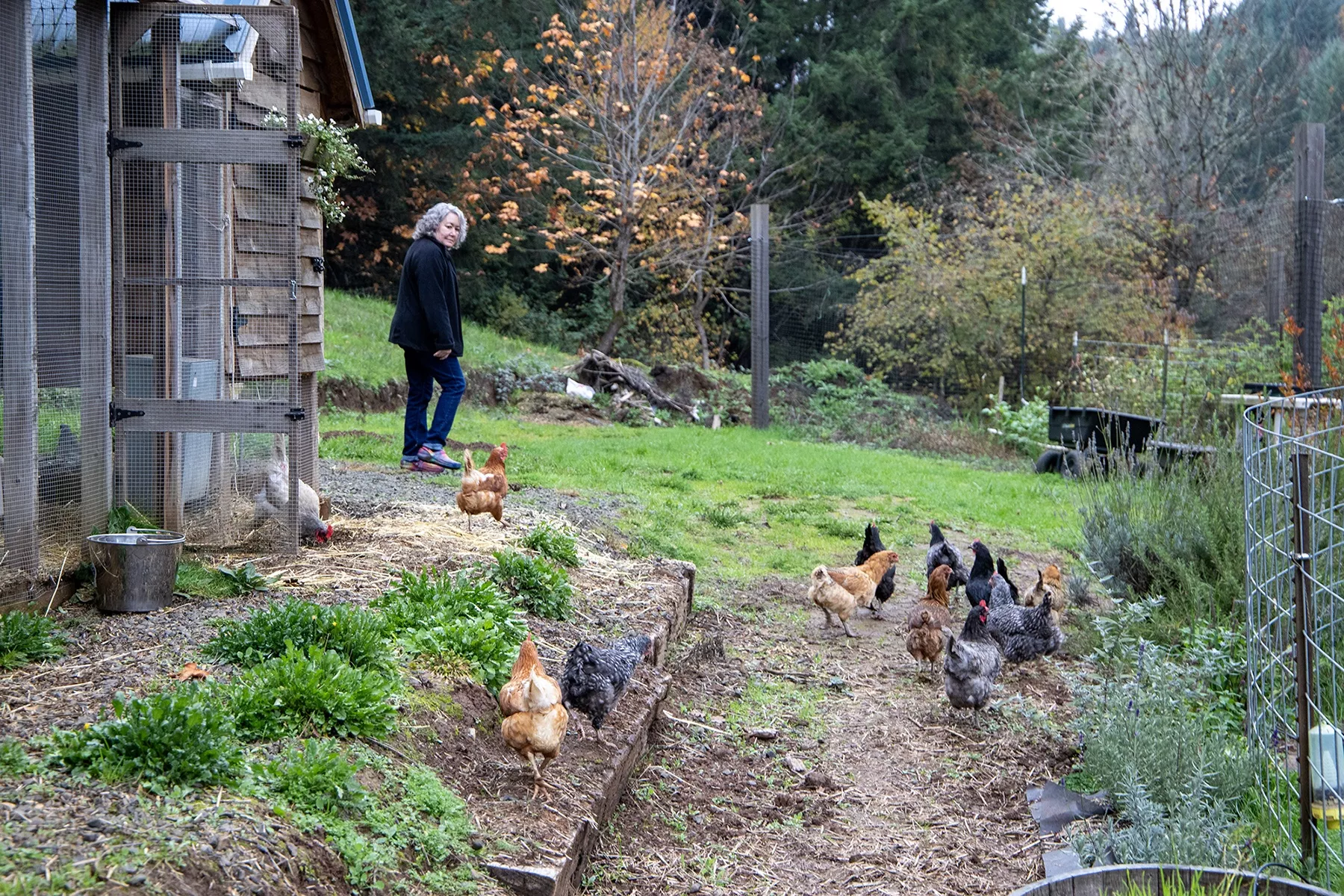
OVDL staff Donna Mulrooney knows HPAI also affects mammals, meaning humans could potentially be at risk eventually. Currently the World Health Organization considers the risk low of HPAI becoming a significant zoonotic disease. But given the track record of influenza viruses, the WHO continues to monitor the situation. (Courtesy: Oregon State University Carlson College of Veterinary Medicine)
The national impact on poultry production has been profound, leading to the death of more than 72 million birds and record high prices for eggs in the United States in 2022.
The impact of HPAI on wild birds is less well known and every bit as serious, especially in species struggling to survive. The virus got into Arizona’s population of critically endangered California condors, leading to a harrowing death toll.
Tabitha Viner, veterinary forensic pathologist at the Clark R. Bavin National Fish and Wildlife Forensic Laboratory in Ashland, Oregon, considered the effects of HPAI on the endangered birds.
“At the forensics lab, we get all of the condors that die in the wild,” she said. “The Arizona population started to have mortalities. The clinical signs seen before they died were suspicious for avian influenza.”
Viner and colleagues received 17 condors from Arizona dead from HPAI; the diagnosis was established at the OVDL.
“Something like 20% of the Arizona condor population died of avian influenza over four to six weeks,” Viner said.
Could HPAI Come for Us?
If this isn’t enough, HPAI is infecting and killing mammals too. We’re mammals, which means this has important public health considerations. Across the nation, 16 species of mammals have been diagnosed with HPAI.
At the OVDL, 108 mammals have been tested. Eighteen were positive for HPAI, including two feral domestic cats.
People are afflicted by seasonal flu every year. But sometimes the flu can become much more serious. The 1918 influenza pandemic is the mother of all pandemics. An estimated 50 million people died from H1N1 influenza. It likely originated in a bird or pig.
Currently the World Health Organization considers the risk low of HPAI becoming a significant zoonotic disease. But given the track record of influenza viruses, the WHO continues to monitor the situation.
The Nightmare Scenario
HPAI isn’t the only “high consequence” disease of concern to the NAHLN and its laboratories. Fourteen animal diseases of high consequence are under surveillance by the NAHLN and member laboratories, including the OVDL. Right now, the big concern is African swine fever following its arrival in the Dominican Republic.
“Probably the biggest concern for us is if two outbreaks were to happen at the same time,” Loiacono said. “We’re focused on maintaining a certain level of capability and capacity, but what if African swine fever and HPAI hit at the same time? What if it [HPAI] mutates into a strain that affects people?”
Such a scenario would test the capacity of the most modern of 21st century NAHLN laboratories. For the OVDL, working in facilities dating back to the middle of the last century, it’s not difficult to imagine the devastating impact.
About the Oregon Veterinary Diagnostic Laboratory
The Oregon Veterinary Diagnostic Laboratory is fully accredited by the American Association of Veterinary Laboratory Diagnosticians and provides a full range of animal disease diagnostic services to veterinarians, livestock producers and pet owners in Oregon and the Pacific Northwest, as well as nationally and internationally. The OVDL works closely with local, state and federal agencies, supporting public health and agricultural biosecurity through diagnostic testing and surveillance for zoonotic and foreign animal diseases. The Laboratory is a member of the National Animal Health Laboratory Network, providing disease response testing in partnership with the United States Department of Agriculture. As a vital contributor to the mission of Oregon State University and the Carlson College of Veterinary Medicine, the OVDL provides instruction in the techniques of laboratory diagnostic medicine to professional veterinary medical students.