
January 26, 2026
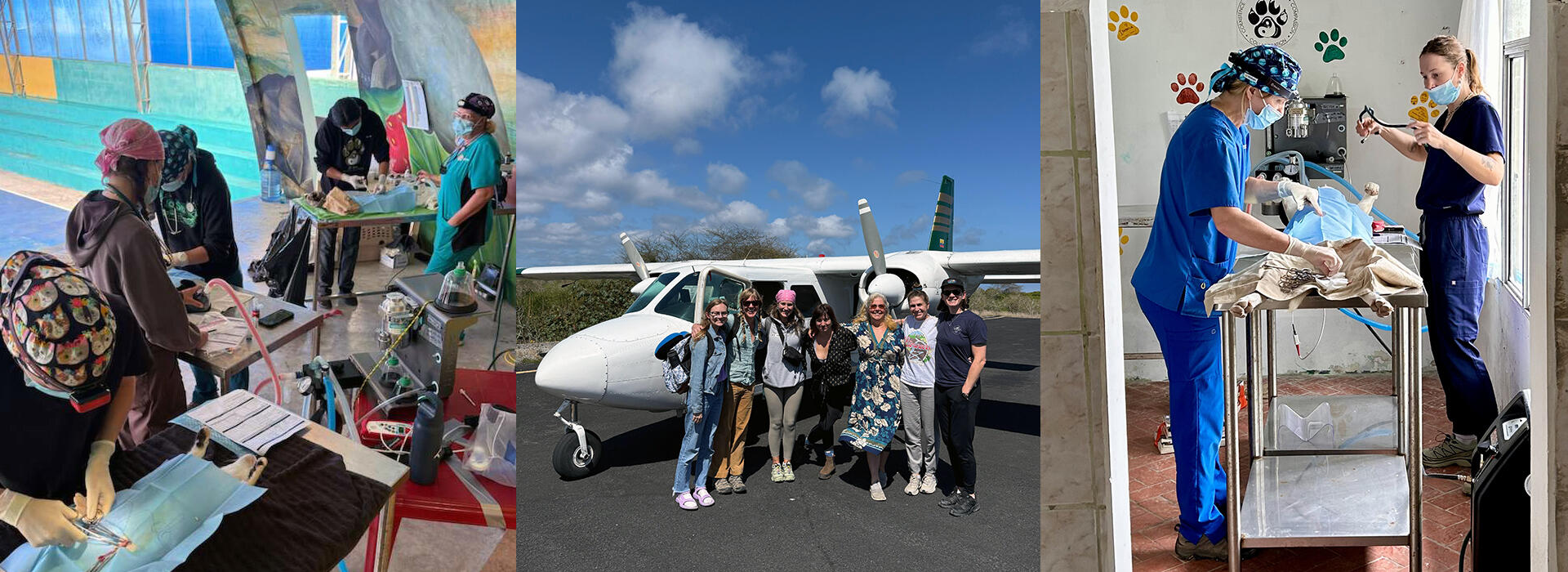
By Jens Odegaard. Photos courtesy of Dr. Wendy Merideth (second from left in center photo).
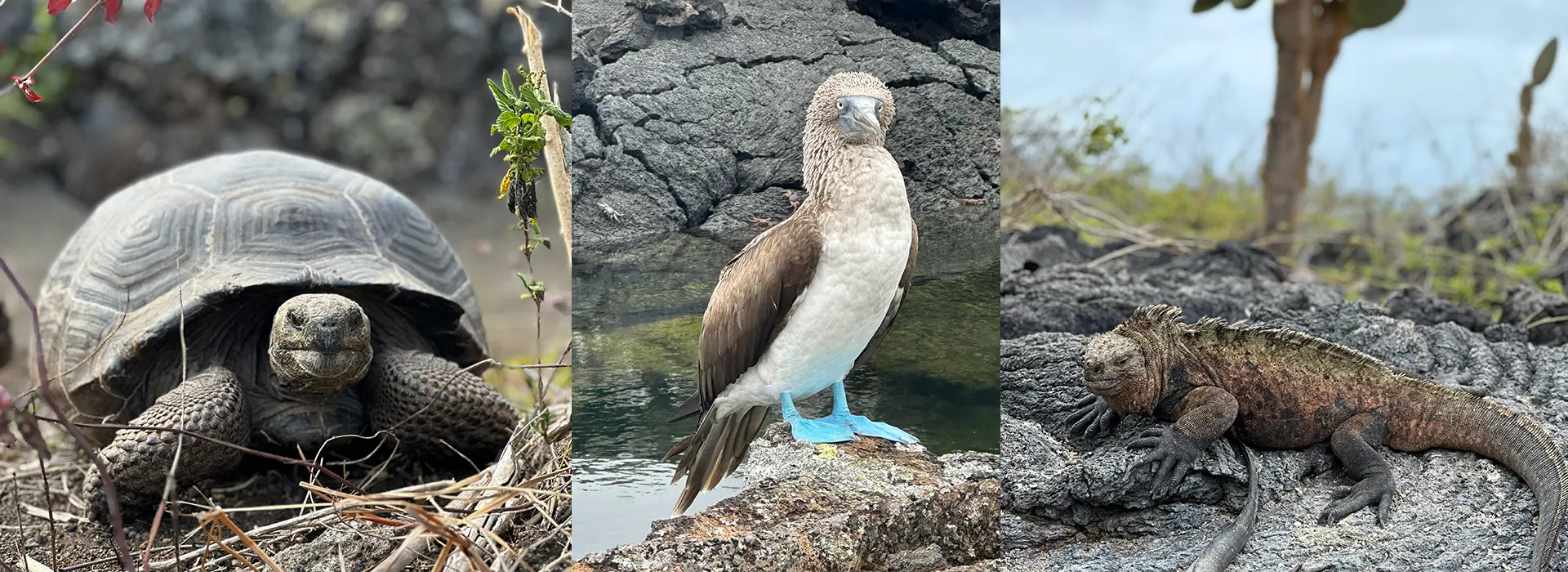
Marine iguanas foraging amongst reefs. Giant tortoises meandering across beaches. Cormorants swimming with flightless wings.
On the Galapagos Islands: “There’s all these iconic species, and you don't want them getting ruined by a dog and cat population that's out of control,” said Dr. Wendy Merideth, 2006 DVM graduate from the Oregon State University Gary R. Carlson, MD, College of Veterinary Medicine. The Galapagos Islands are home to approximately 1,500 animal species unique to the islands.
That’s why Merideth, owner of Sunriver Veterinary Clinic, and her team recently volunteered with Animal Balance on a 10-day trip to Isla Isabela in the Galapagos. Animal Balance is a global nonprofit organization focused on humane animal management programs.
In the Galapagos, Animal Balance’s team is led by medical director Dr. Edisson Llambo (pictured below: second from left bottom row). Animal Balance runs clinics on the island every two to three months, staffed with local volunteers and visiting volunteers like Merideth and crew.
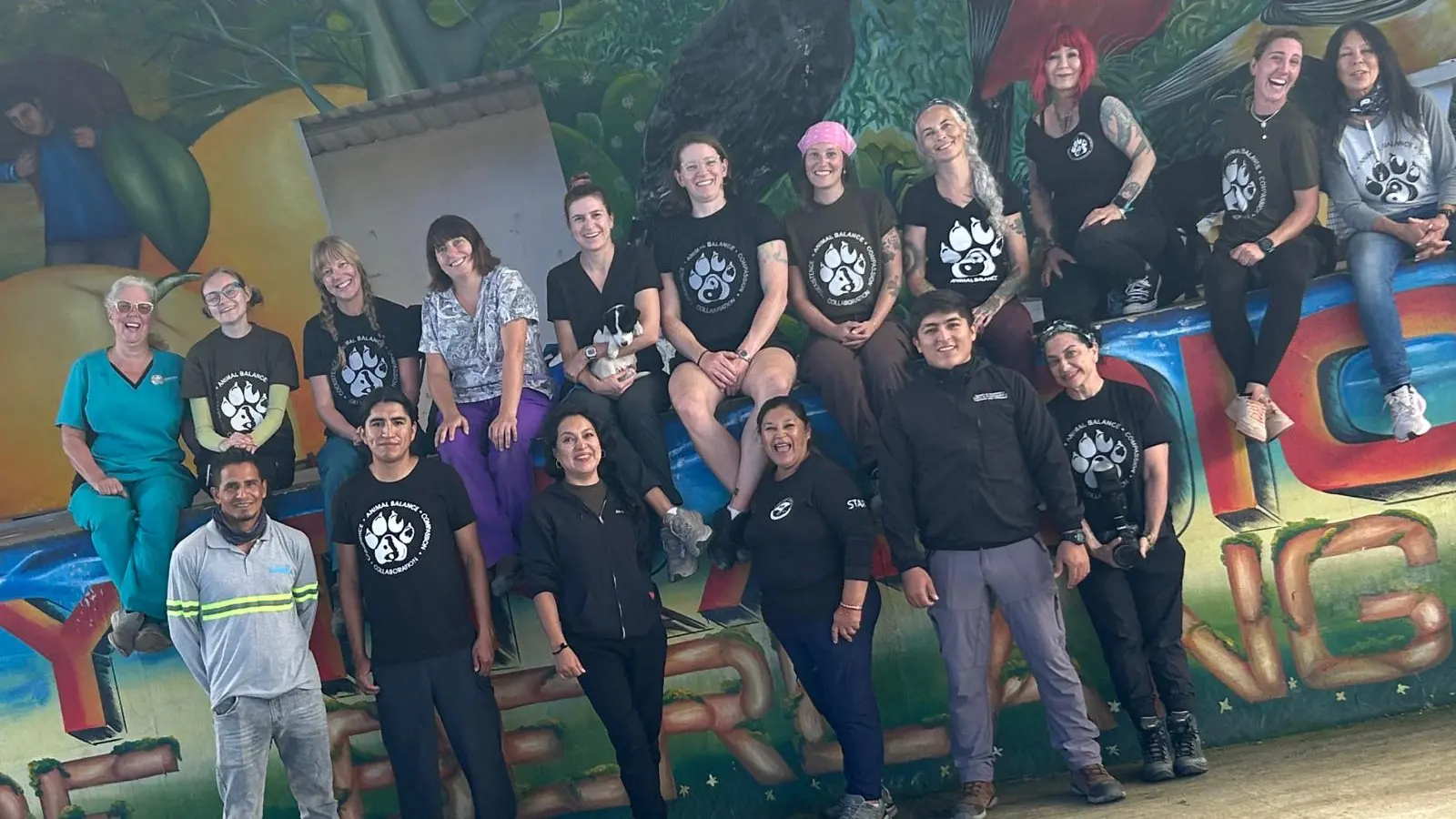
Together, they focused on spaying, neutering and providing general wellness services for dogs and cats. “Our goal was to help protect the unique animal life on the island,” said Merideth.
In addition to Merideth, the Sunriver Veterinary Clinic team included Dr. Lindsay Smith (and her wife, Dr. Courtney McLaughlan from Bend Veterinary Clinic); certified veterinary technician Sarah Bowers; Elena Chadwick, practice manager; and veterinary assistants Phoebe Jackson and Shelby Skaufel.
All told, “There were around 70 surgeries and 200 wellness appointments,” Merideth said. “It’s a way to give back to help preserve the biodiversity of such an incredible, magical place and to help the animals that don't otherwise have surgical care. The local people were very appreciative as they care for both their pets and the unique environment that is the Galapagos Islands.”
Through Animal Balance’s ongoing work in the Galapagos, the sterilization rate for the islands' dog and cat population is approaching 80%.
“Animal Balance has been protecting Galapagos wildlife through humane population control for over 20 years,” Merideth said. “Consider volunteering for this organization!”
For Merideth, her first exposure to island veterinary care came as an undergraduate at Oregon State University. While enrolled in the animal science program, she did an externship at a clinic on Raratonga in 2001.
“I lived at the clinic, and I was just basically on call 24/7,” she recalled. “Sometimes people would pay us with a rack of bananas, otherwise it was mostly free and donations. I would document and keep track of every case … I organized the pharmacy … and assisted the doctor to do anesthesia, catheters, treatments and kept the place clean. It was a lot of work.”
The Galapagos trip has piqued her interest in doing more overseas volunteer work in the future. She even ponders a trip back to Raratonga. “Maybe I'll go back there someday as a vet. I’ve heard the dog population needs some control,” she said. “The problem is the dogs getting hit by cars or that sort of thing or not being taken care of.”
Back home in central Oregon, Merideth volunteers providing veterinary care at Think Wild, a nonprofit wildlife hospital, and volunteered with the Bend Spay and Neuter Project and the Feral Cat Coalition of Oregon in the past.
“[Volunteering] seems like the right thing to do if you have a skill and you have some discretionary time and income to give back to the planet, and if we all do that, then just hopefully we’re helping things get better.”
Related Stories