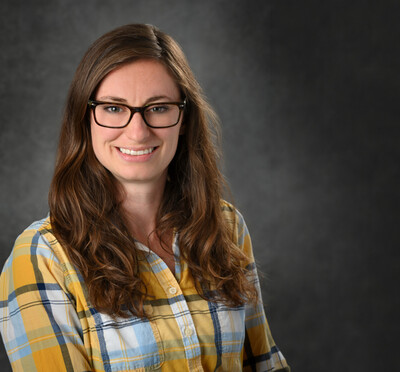


Dr. Andrea Erickson joins the Gary R. Carlson, MD, College of Veterinary Medicine as an assistant professor in soft tissue surgery and surgical oncology.
Originally from Kailua, Hawaii, her family’s golden retrievers sparked her lifelong love of veterinary medicine. She earned her DVM from Colorado State University and completed advanced training including internships at Wheat Ridge Animal Hospital and the University of Florida, a surgical residency at The Ohio State University and a surgical oncology fellowship at CSU. She also holds a master’s in biomedical education.
Her professional interests include fluorescence‑guided imaging, intraoperative margin assessment, surgical oncology innovation and veterinary surgical education. Outside of work, she enjoys exploring Oregon with her husband and enjoying time with their calico cat, Mele.
We sat down with Dr. Erickson for a Q&A.
What attracted you to Oregon State and continuing in academia?
My husband and I live very active lifestyles and are always in nature whether it be hiking, paddleboarding, skiing, biking, horseback riding, camping or spending time with family and friends. The close proximity to the Oregon mountains and coastline is what attracted me to the position at Oregon State University. After visiting the campus, I enjoyed the warmth of the faculty and staff and collegial nature of the veterinary school. The smaller school size makes it more personable and allows you to get to know your colleagues and trainees on a closer level. Teaching has always been a part of the job that I have been drawn to and truly enjoy. Continuing in academia allows me to take part in creating the best training programs possible for residents and veterinary students.
What most excites you about being part of the small animal surgery team here at Oregon State and how would you like to see it grow?
I look forward to working with multiple departments in the hospital for case collaboration and innovative treatment options for patients. My surgical interests include fluorescence guided patient imaging and margin assessment within the field of surgical oncology. I look forward to working with my colleagues to further implement the use of patient specific fluorescence guided imaging and how it may be used to guide steps in surgery and for more accurate real time margin assessment.
As a faculty member in a teaching hospital what do you hope to bring to the students/residents/interns you'll be working with?
My teaching philosophy is supporting trainees towards gradual clinical independence and taking ownership of their learning. Everyone learns differently, and I encourage students, interns and residents to take responsibility for their clinical cases, as the more they put into preparing for a case, the more they take away as well.
What does it mean to be an ACVS Fellow in Surgical Oncology?
A fellow in surgical oncology is a Diplomate of the American College of Veterinary Surgeons who has obtained additional training and experience beyond surgery residency training, demonstrates expertise in surgical oncology,and devotes a major portion of their professional effort to research and to the prevention, diagnosis, treatment and rehabilitation of cancer patients.
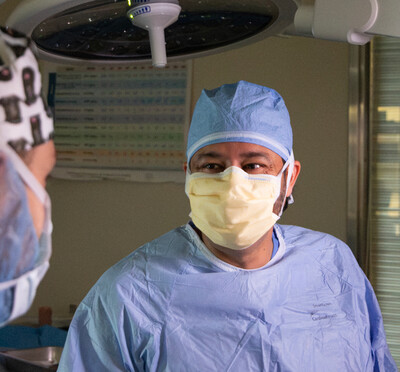
I performed a surgical oncology fellowship training program at Colorado State University, which provided me experience in advanced cancer surgeries and allowed me to work with an integrated team of medical oncologists, radiation oncologists and a clinical trials team. This fellowship granted me additional experience in cutting edge cancer diagnostics and innovative treatments. There are currently fewer than 100 surgical oncology fellows in the world, and I look forward to using this skill set to provide treatment options for the pets of Oregon.
What do you enjoy most about your work?
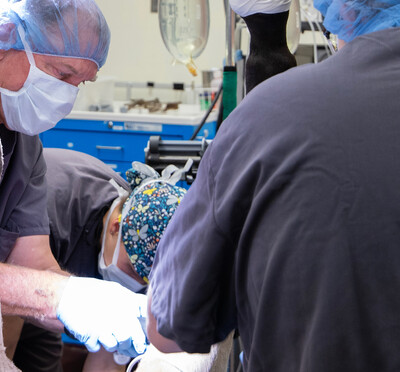
My favorite parts about my job is providing advanced oncologic surgeries, which give people more time with their pets. We can achieve success in these intricate surgeries due to the effort put in by clinicians for case integration between the oncology and surgery teams. This helps to provide a patient specific treatment plan based on feedback from multiple services. This ensures that each patient receives several treatment options and the support of an integrated team.
What's your philosophy of patient treatment and care?
Compassion leads my philosophy of patient treatment and care, especially when it comes to those with cancer. Pets just like people, deserve to have options and the right decision is different for each family. I love being able to perform surgeries that give people more time with their pets. Having options, and the support of an expert and compassionate cancer team, can make all the difference.