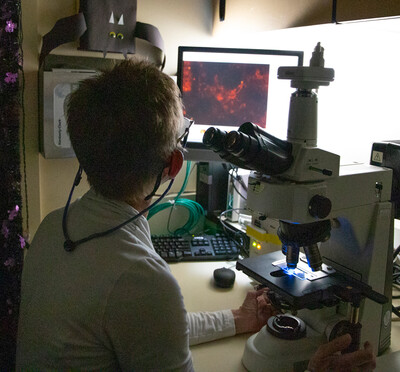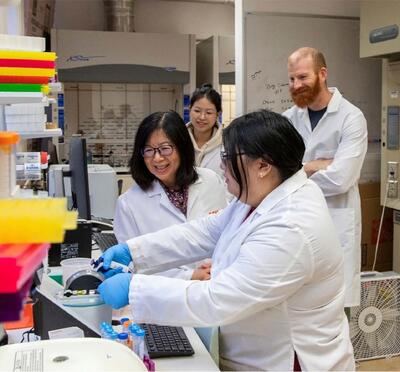


The Oregon Veterinary Diagnostic Laboratory is the state’s best kept secret when it comes to diagnosing weird diseases people can get from other animals.
The laboratory is an essential unit within the Carlson College of Veterinary Medicine at Oregon State University in Corvallis. It is Oregon’s One Health laboratory. Its mission: to diagnose diseases in animals to better the health of Oregon’s animals, the environment and citizenry.
The OVDL is the only laboratory in Oregon accredited by the American Association of Veterinary Laboratory Diagnosticians and is the state’s sole member of the National Animal Health Laboratory Network, a consortium of laboratories distributed across the United States charged with protecting U.S. agriculture from high consequence animal diseases, particularly those not currently in the country: foreign animal diseases.
Today the laboratory faces challenges – largely because of antiquated infrastructure and flagging state support – that could not be foreseen when it was founded in the late 20th century. It’s in need of a dramatic increase in financial support from the state and public to meet current and future challenges facing Oregon and the nation.
Groundbreaking lab work in outdated facilities
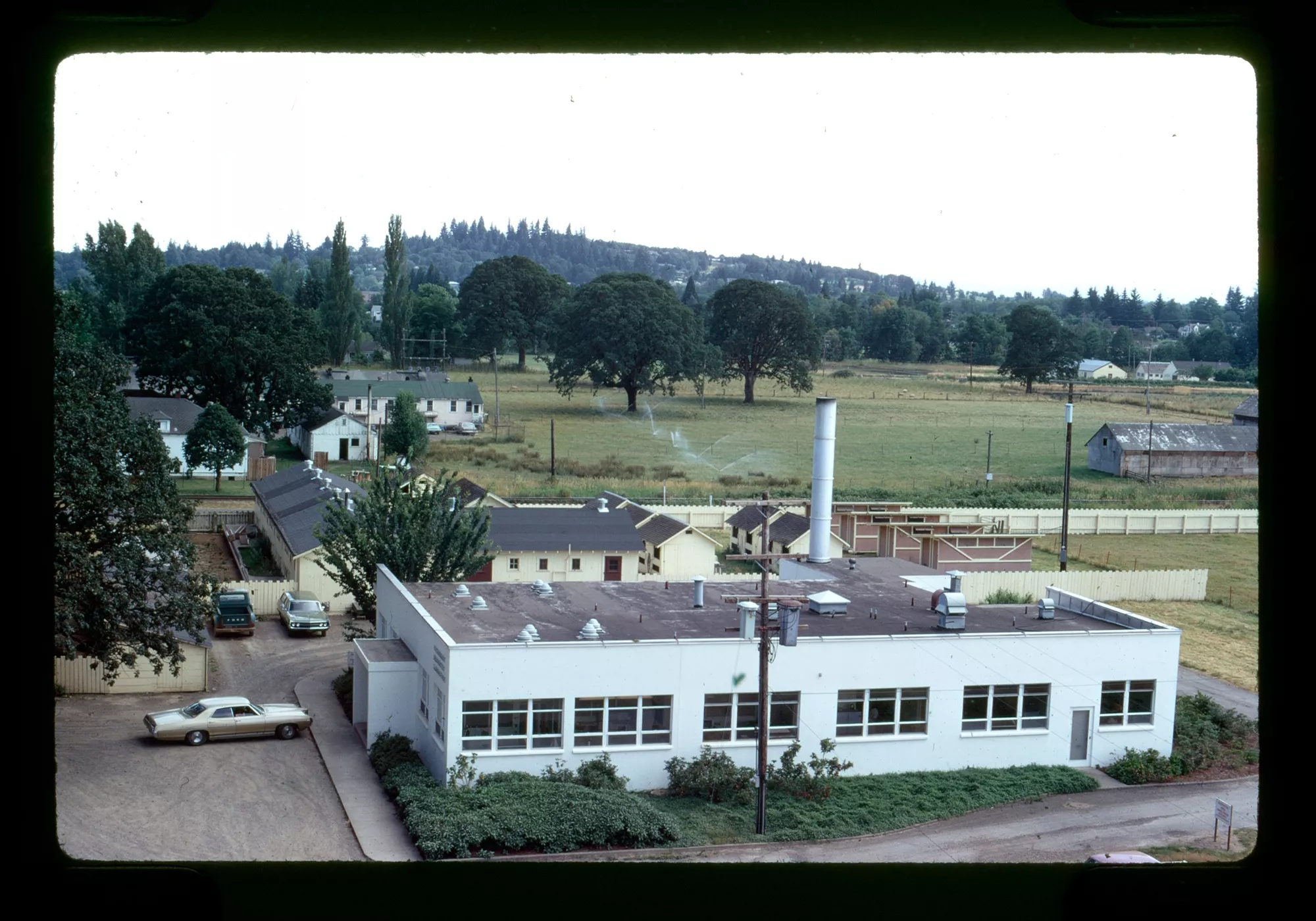
The laboratory is considerably older than the college, originally occupying what is now known as the Veterinary Research Laboratory (VRL) building which was built in 1952. This facility is still being used by critical divisions of the OVDL today.
The VRL is a low-slung, non-descript boxy building. Its bland aesthetics and aged, enfeebled construction bely the sophisticated work daily undertaken therein by today’s scientists.
In 1981, the Carlson College of Veterinary Medicine opened in the newly built Magruder Hall, just down from the street from the VRL. Much of the OVDL moved into this then new space in Magruder, where it continues its work to this day in space that has gone nearly unchanged in the ensuing 40 years.
Unbeknownst to the dignitaries gathered for the 1981 dedication, a new laboratory technique was just around the corner: PCR was invented in 1985. And just like that, four short years after the new building was dedicated, the laboratory was, in some respects, outdated for what the future would bring.
It’s difficult to overstate the transformative power PCR brought to diagnostic medicine. For its import, the inventors were awarded the Nobel Prize in Chemistry in 1993.
A 1985 test made essential in 2020
PCR – the polymerase chain reaction – has, in large part because of the COVID-19 pandemic, become part of our lexicon, even if most of us don’t really understand why and how the technology changed science and medicine.
PCR allows scientists to quickly sort through a pile of genetic code — DNA or RNA — to look for the presence of very particular — often exceedingly rare — identifiable sequences of letters in the code.
For most people, that process may seem too abstract to understand, but it’s become vitally important for all our lives.
Here’s another way to think about it: imagine a specially designed paper shredder capable of shredding books sentence-by-sentence. Then imagine this shredder is used to tear through all the books in the New York Public Library, leaving an enormous pile of gibberish. Now imagine someone asks you to reach into that pile of gibberish and pull out the one piece of paper bearing Melville’s iconic opening line: “Call me Ishmael,” from Moby Dick.
Impossible.
PCR can do something like that: identify and pick out specific – and rare – bits of genetic alphabet in a pile of genetic material, based on what that strand of alphabet spells. This ability lends itself to a multitude of applications in medicine, such as identifying the presence of infectious agents, as with COVID-19 in your nose.
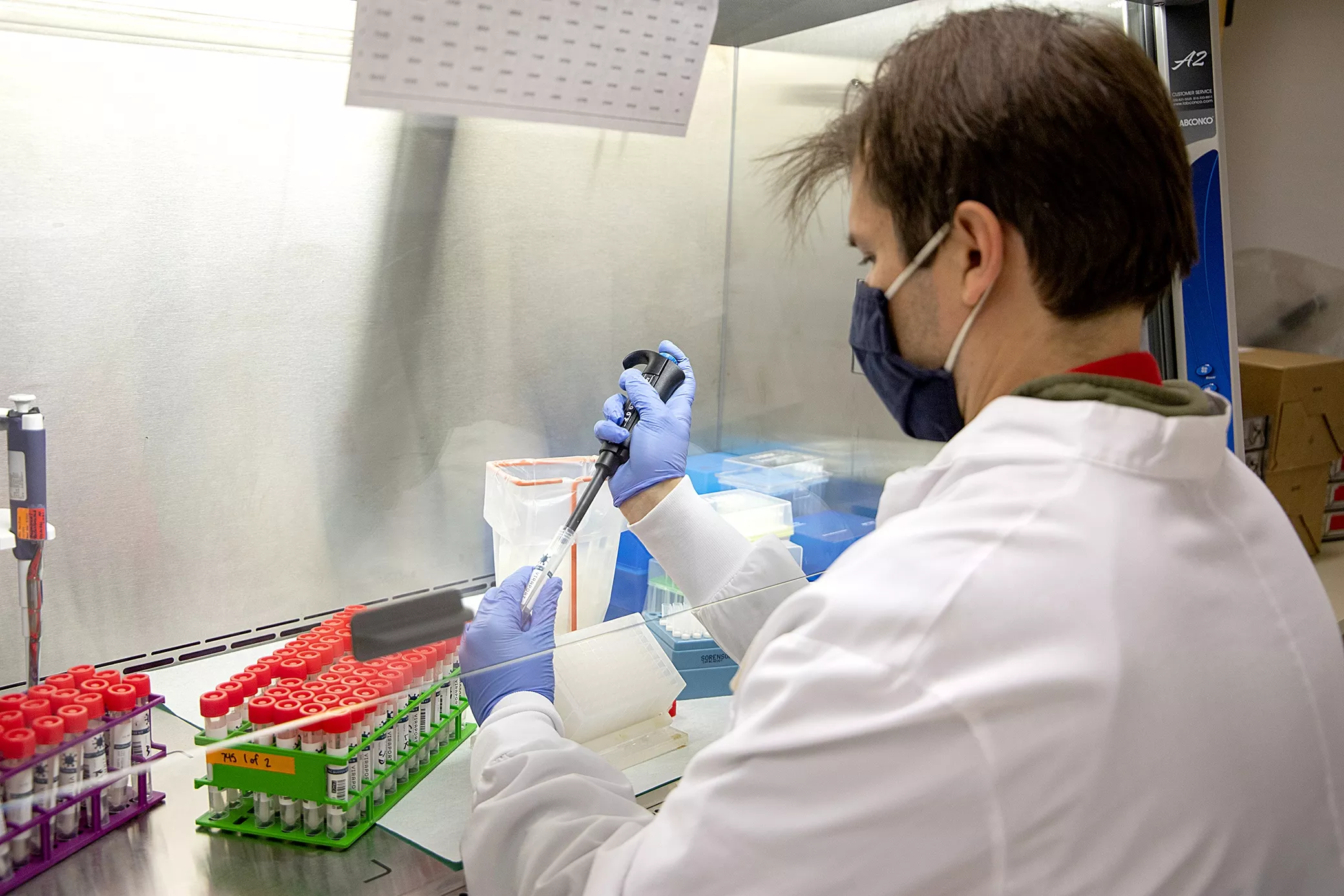
The OVDL played a critical role when the pandemic arrived in Oregon, stepping up to test for COVID-19. When the pandemic began in 2020 the laboratory reached out to public health officials to volunteer to help with testing, but they were reluctant to take the lab up on its offer.
“We had a conference call with the Oregon department of public health and they pretty much poo-pooed the idea because we were ‘just a vet lab’,” said Donna Mulrooney, quality assurance manager for the OVDL. “They began telling us, ‘It’s really difficult; there’s a lot of quality assurance and a lot of details’ and going on and on about things we’re already doing, but they didn’t know we were already doing it.” She listened on zoom thinking to herself, “that’s what we do every day, and we’re completely capable of doing that.”
In the end, the lab ran over 300,000 COVID PCR tests for the state of Oregon.
Unfortunately, it’s just a matter of time before we experience another zoonotic pandemic.
This reality prompted Oregon’s legislature to act in 2022. The Legislative Policy and Research Office prepared a report evaluating Oregon’s current framework for “monitoring, preventing and responding to zoonotic diseases,” and identifying opportunities to strengthen the state’s framework.
In the report the laboratory is identified by multiple state agencies as being paramount to responding to zoonotic disease in Oregon. “The OVDL is central to activities of the state’s zoonotic response framework,” it said.
In response to information in the LPRO report, in 2023 House Bill HB 3247 was put forth for consideration. The legislation would have appropriated funds to the OVDL for purposes related to zoonotic disease monitoring and response in Oregon. In addition, it would have provided funding for the design of a new laboratory for Oregon to meet the challenges of the 21st century.
At the end of the fiscal year, it remained in House committee at adjournment, unfunded.
The OVDL is in dire need of a dramatic increase in financial support from the state and public to meet current and future disease challenges for Oregon and beyond.
For Mark Ackermann, former director of the OVDL, his concern for the future was crystalized by his lived experience shepherding the laboratory during the COVID-19 pandemic. “We’re just right in the middle of everything and we’re working with 1970s-era facilities with the responsibility of 2021 biosecurity,” he said.
What can you do to support the OVDL in its mission to keep the public safe from zoonotic disease? Reach out to your state legislators. Urge them to support public health in Oregon by increasing state support of the Oregon Veterinary Diagnostic Laboratory, including the construction of a new 21st century laboratory to position the state to meet the challenges, known and unknown, on the horizon.
Related Stories