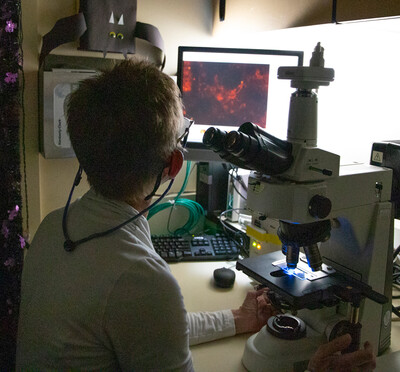


Dr. Christiane Löhr is a professor of anatomic pathology in the Gary R. Carlson, MD, College of Veterinary Medicine's Oregon Veterinary Diagnostic Laboratory. We sat down with her to learn more about her and her work.
What drew you to this field and how did you get started?
I have always loved animals, biology and science. Early in veterinary school at the Justus Liebig University, Giessen, Germany, I found myself especially drawn to the logic and visual appeal of anatomic pathology. Although I originally intended to become a large animal practitioner, I quickly realized that the microscopy and gross pathology labs were the parts of veterinary school I enjoyed most. The professors were so engaging, knowledgeable and inspiring, and one ultimately encouraged me to pursue a combined program in anatomic pathology.
The pathology department was housed in a drafty but beautiful historic building, and because my position was initially unfunded, I worked in an office and learned to economize while completing the five year residency and my doctorate. After graduating, the recession following the German reunification made jobs scarce, prompting me to seek opportunities abroad. I returned to Washington State University, where I had completed an externship, to pursue a Ph.D. and additional pathology training before joining OSU and the OVDL in 2003.
What's your favorite part about your job and why?
I enjoy many aspects of my work at OSU, but within the OVDL, the extraordinary variety of cases is especially rewarding. Every week brings something unusual, puzzling, or novel, and this constant challenge — combined with teaching and mentoring — keeps the work stimulating and meaningful.
What's one thing you wish people knew about your job?
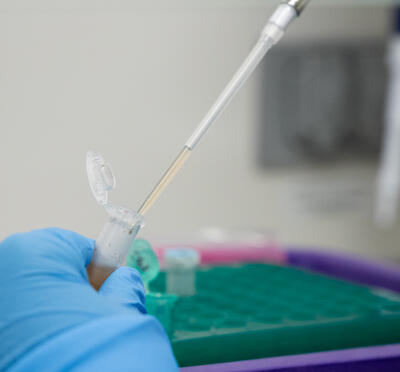
I love the pathology: the detective work following clues to explain the who done it, when, where and how. Contrary to some beliefs, pathologists are not mushrooms — we cannot do our best work when kept in the dark and fed manure. Meaning that effective diagnostics depend on communication, case context and high quality samples. While routine cases require minimal history, many skin, neuromuscular and skeletal conditions cannot be diagnosed accurately or even identified without detailed clinical information. Vital clues can be missed or lost forever if pathologists work with too little context.
What's the most interesting case you've worked on and why?
It’s impossible to choose just one. Over the years I’ve encountered a hippo with an impaction from a swallowed tennis ball, an octopus in senescence with a protozoal infection, cats who caught the flu from their caretakers and a case of saving a person’s life by accurately and rapidly diagnosing a zoonotic disease in a squirrel they handled. Some cases involve entirely new to me species, sending me to the literature before diving into the work up, while others begin as routine submissions and evolve into genuine mysteries leading to research questions and discoveries.
Do you have any hidden talents or unique hobbies? Share them with us!
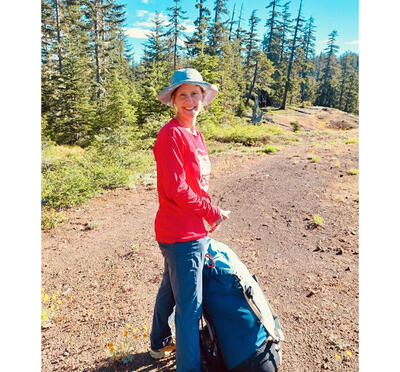
I play the violin and sing in a choir, and I’m an avid photographer. I enjoy travel with a purpose, backcountry hiking, long walks with our Aussie Kelpie Milo, dancing and have recently rediscovered painting. Most of all, I love exploring the world with my husband Bill, who is always ready for an adventure, and spending time with our children and, as of recently, grandchildren.
Related Stories