

October 8, 2026
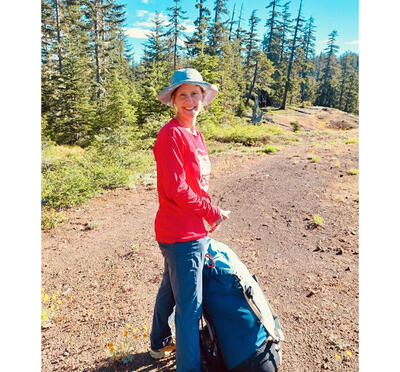
Dr. Marlie Nightengale joins the Oregon State University Gary R. Carlson, MD, College of Veterinary Medicine as an assistant professor of clinical pathology. Prior to joining Oregon State, Dr. Nightengale did her undergraduate studies at Oklahoma State University in biology and veterinary school at Louisiana State University, where she graduated in 2021. Following graduation, she completed a small animal rotating internship at Virginia Tech, followed by a specialty internship with the Virginia Tech oncology service. She remained at VT for her clinical pathology residency and master's degree, both of which I completed in the summer of 2026. Dr. Nightengale is board-certified in clinical pathology.
She will be providing diagnostic service in the Oregon Veterinary Diagnostic Laboratory. We sat down with Dr. Nightengale for a Q&A.
What attracted you to Oregon State and academia?
The collegial culture that I experienced when I visited Oregon State and the robust collaborative efforts between the Oregon Veterinary Diagnostic Laboratory and the surrounding veterinarians drew me to OSU. The diverse species caseload, including exotics species, is something that I am looking forward to encountering in my practice. Through academia, I am looking forward to teaching veterinary students as well as post-graduate trainees and residents.
What most excites you about being part of the pathology team here at OSU?
I am most excited to get to teach students and trainees, so I can share my passion for clinical pathology with growing veterinarians.
What philosophy guides your approach to clinical pathology?
As a diagnostic service, my philosophy is to provide an objective opinion based on the provided clinical information and specimens. It can be really easy to get emotionally involved with a case, which can influence objectivity. While I often miss getting to know the patients personally, I think it is that step back from direct interaction with the patient that allows me to report what I see without being influenced by the patient's history, signalment or cuteness. In this way, I can be more helpful to the clinicians and owners as they make the medical decisions.
As a faculty member in a teaching laboratory, what do you hope to bring to the students/residents/interns you'll be working with?
I hope that my enthusiasm for cytology will help foster curiosity in students and trainees and will encourage them to look at samples under the microscopes themselves before submitting slides to pathology. I think that developing confidence in your own abilities to systematically and logically evaluate a slide is key to interpreting a pathology report, especially when the results are unexpected or do not align with the clinical impression. My goal is to help students find the tools they need to develop that confidence and to critically evaluate results when they are incompatible with their clinical impressions.
What do you enjoy most about your work?
I love looking into the microscope and being completely surprised by what I see. I also love communicating and collaborating with other services in the hospital. While we are often only a small part of a patient's visit to the clinic, the cytologic diagnosis is only possible due to the overlapping efforts of the overseeing service, clinicians and students, and everyone else involved in the case throughout the day.
Related Stories